What this guide is really answering
How to Compare Supplement Prices Fairly is best treated as a question about supplement safety and buying quality. Search results in this area often mix anatomy, advertising, testimonials, ingredient research and disease information. Those categories are not interchangeable. This guide keeps them separate so that a reader can decide how to reduce avoidable risk and recognize weak marketing.
The first distinction is between a mechanism and an outcome. A mechanism explains how something might work in the body; an outcome shows whether people actually experienced a meaningful change under controlled conditions. Supplement marketing often starts with a plausible mechanism and then moves quickly to a confident benefit statement. That jump may be larger than the evidence supports. A compliant-looking label, testimonial or manufacturing statement is not proof that a supplement will work for an individual.
The second distinction is between population-level evidence and an individual decision. Even when a trial reports an average effect, not everyone responds the same way. Age, diagnosis, medicines, activity level, comorbidities and the exact formulation can change the balance of benefit and risk. Check the label, interactions, return terms, true delivered cost and evidence before paying.
What independent evidence can add
For this topic, the most useful independent evidence is evidence that matches the exact question. The useful question is not which ingredient sounds more impressive, but which exact preparation has the stronger evidence and better fit for the user's goals and risks. A strong source hierarchy begins with authoritative health guidance for clinical context, then systematic reviews and well-conducted randomized trials for specific interventions. Mechanistic papers are useful for understanding plausibility but usually sit lower in the decision hierarchy when the question is whether something improves symptoms or function.
Study design matters because small biases can look like treatment effects. Randomization can reduce systematic differences between groups; blinding can reduce expectation effects; adequate follow-up matters for outcomes that change slowly; and prespecified outcomes reduce the temptation to highlight only favorable findings. Sample size matters too, because small trials can produce unstable estimates. None of these features makes a study perfect, but together they affect confidence.
Evidence synthesis also requires attention to heterogeneity. Two trials that both say 'Boswellia,' 'ginger,' or 'hyaluronic acid' may use different extracts, doses, durations and participant criteria. Pooling them can be informative, but the result still needs to be interpreted in light of those differences. This is one reason Joint Clarity avoids turning ingredient-category research into an automatic endorsement of a finished supplement.
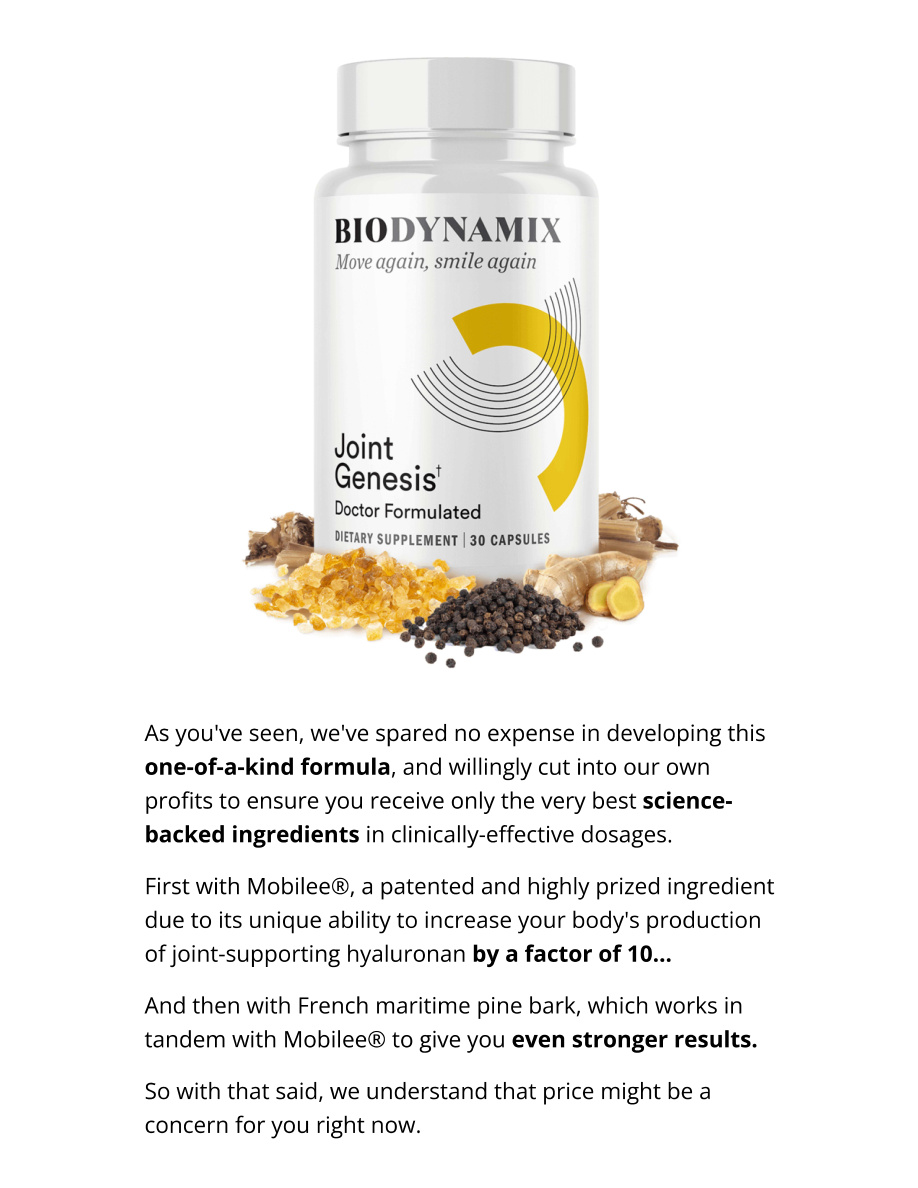
Considering Joint Genesis?
Read the evidence, compare alternatives, and confirm the current merchant terms before deciding.
View the Official Joint Genesis OfferWe may earn a commission if you buy through this link. This does not increase your price.
Keep supplements in proportion
For osteoarthritis, established self-management strategies remain important context. CDC and clinical guidance summarized by NCCIH emphasize appropriately selected physical activity, strength or aerobic exercise, weight management when appropriate, joint protection and shared decision-making with health professionals. Tai chi has supportive evidence for knee or hip osteoarthritis symptoms, while evidence for many supplements is mixed or limited.
That does not mean every supplement is useless, nor does it mean every exercise is appropriate for every person. It means the comparison should include realistic alternatives. A product that costs hundreds of dollars over several months should be compared not only with another bottle but also with lower-cost strategies, professional evaluation when indicated, and interventions with stronger evidence for the user's specific diagnosis.
Symptoms also deserve diagnostic humility. 'Joint stiffness' can arise from many causes, and the correct response to a traumatic injury, inflammatory arthritis, infection, gout, medication effect or mechanical overuse is not the same. Sudden severe pain, significant swelling, redness or warmth, inability to bear weight, fever, major trauma or unexplained persistent symptoms warrant medical assessment rather than self-treatment with a supplement.
How to compare the label and the research
Start with the Supplement Facts panel, not the front of the bottle. Write down each active ingredient, amount per serving, serving size and any proprietary blend. Then compare those amounts with the preparations used in relevant human research. If the label does not disclose enough information to make that comparison, the uncertainty belongs in the buying decision rather than being ignored.
Next, look at the outcome. Pain scores, stiffness scales, function tests, rescue-medication use, quality-of-life measures and biomarkers answer different questions. A statistically significant change can still be too small to matter in everyday life. Conversely, a meaningful improvement in function may matter even if a laboratory marker barely changes. Read the actual endpoint before accepting a headline.
Finally, look at duration and comparator. A six-week trial does not establish a six-month effect. A placebo-controlled trial answers a different question from a head-to-head comparison. When the product combines multiple ingredients, ingredient studies can support plausibility, but the most direct evidence would be trials of the finished formula itself at the marketed dose.
Safety and interactions
Dietary supplements can cause adverse effects and can interact with prescription or over-the-counter medicines. Risk depends on the exact ingredients, doses and individual circumstances. People who are pregnant, preparing for surgery, managing chronic conditions, or using anticoagulant, antiplatelet, diabetes, blood-pressure or other prescription medicines should not assume a multi-ingredient joint formula is automatically appropriate because its ingredients are described as natural.
Botanical ingredients can be especially complicated because extracts are chemically variable. Ginger, Boswellia, pine bark and black pepper extracts may have pharmacologic activity. BioPerine® is a black-pepper extract marketed for absorption; altering absorption is precisely why interaction questions deserve attention. The safe approach is to bring the complete label—not just the product name—to a pharmacist or clinician who can consider the full medication list.
Allergy and intolerance questions matter too. A website statement such as 'free from' should be checked against the current product label and manufacturing information. If someone has a severe food allergy, celiac disease or another condition where contamination matters, a broad marketing statement should not substitute for current manufacturer confirmation or professional advice.
Considering Joint Genesis?
Read the evidence, compare alternatives, and confirm the current merchant terms before deciding.
View the Official Joint Genesis OfferWe may earn a commission if you buy through this link. This does not increase your price.
How to read marketing without overcorrecting
Supplement marketing often uses true facts in ways that imply more than the facts directly show. A facility can follow current Good Manufacturing Practices without proving that the product is clinically effective. An ingredient can be patented without proving that the finished formula produces a meaningful benefit. A physician can appear in marketing without turning every statement on the page into medical consensus.
FDA distinguishes structure/function claims from disease claims. A dietary supplement may describe support for normal structure or function when regulatory requirements are met, but that is different from claiming to diagnose, treat, cure or prevent disease. FTC guidance separately emphasizes that both express and implied health claims need adequate scientific substantiation. The practical lesson for readers is to evaluate the message the advertisement communicates, not only the exact verbs it uses.
Testimonials deserve a similar filter. A sincere testimonial can describe one person's experience, but it does not establish causation, typicality or expected magnitude of benefit. Regression to the mean, changes in activity, concurrent treatments and natural symptom fluctuation can all influence perceived results. Use testimonials to understand what customers value or complain about, not to estimate your own probability of success.
Price, guarantee and value
Value is not simply the lowest price per bottle. Calculate the delivered cost per day, including shipping and any required quantity. Then ask how long you would need to use the product before you could reasonably judge it. A lower unit price on a six-bottle package can still mean a much larger upfront commitment than a shorter trial. That tradeoff is especially important when evidence is uncertain.
A money-back guarantee can reduce financial risk, but it is not evidence of effectiveness. Read the return window, whether empty bottles qualify, what must be returned, who pays return shipping and how refunds are requested. The supplied Joint Genesis offer advertises a 180-day 'empty bottle' satisfaction guarantee, but the current merchant policy controls and should be checked before purchase.
Avoid letting 'savings' language define the comparison. A discount from a reference price may be less important than the total cash outlay and whether another option has better evidence or a simpler formula. If the real decision is between spending on a supplement and paying for professional assessment, physical therapy, exercise equipment or another health priority, include those alternatives in the value calculation.
A practical decision checklist
Before acting on how to compare supplement prices fairly, write down the exact goal in one sentence. 'I want better joints' is too vague; 'I want to know whether this formula is worth trying for my current stiffness after discussing safety with my clinician' is specific enough to evaluate. Then list the evidence you would need to feel comfortable, the maximum amount you are willing to spend, and the point at which lack of improvement would change your plan.
Check five things: the exact ingredient form and amount, the match between the product and the research, interaction or allergy concerns, the total delivered cost, and the refund conditions. If any of those are unclear, uncertainty should lower confidence rather than being filled in with assumptions. A good buying decision can still be 'not yet' while you gather information.
The final step is proportionality. Check the label, interactions, return terms, true delivered cost and evidence before paying. A supplement is one optional tool in a much larger joint-health picture. Clear evidence, realistic expectations and a plan for what to do if symptoms change are more useful than chasing the strongest promise.
Frequently asked questions
Is a dietary supplement FDA approved before sale? Generally, dietary supplements are regulated differently from drugs, and manufacturers do not obtain FDA premarket approval in the same way a new drug does. That is why quality claims and clinical claims need to be evaluated carefully rather than inferred from the mere fact that a product is on the market.
Does a patented ingredient prove a product works? No. A patent can relate to composition, processing or use; it is not the same thing as clinical proof of a meaningful benefit. The relevant question is whether well-designed human studies on the same preparation and dose support the claim being considered.
How long should someone try a joint supplement? There is no universal answer. The appropriate duration depends on the ingredient evidence, the condition being addressed, safety and cost. If symptoms are significant or the diagnosis is uncertain, professional assessment should not be delayed simply to complete a supplement trial.
Related Joint Clarity guides
Sources and further reading
- FDA — Dietary Supplements: Questions and Answers
- FDA — Structure/Function Claims
- FTC — Health Products Compliance Guidance
- NCCIH — Complementary Health Approaches for Osteoarthritis
- NCCIH — Arthritis and Complementary Health Approaches
- CDC — Osteoarthritis
- PubMed — Boswellia systematic review/meta-analysis
- PubMed — Ginger meta-analysis
- PubMed — Ginger systematic review/meta-analysis
- PubMed — Pine bark extract trial
Product-specific offer details are based on the 41-page Joint Genesis sales-page PDF supplied for this site. Independent medical and regulatory context comes from the sources above. Last reviewed September 2026.
Considering Joint Genesis?
Read the evidence, compare alternatives, and confirm the current merchant terms before deciding.
View the Official Joint Genesis OfferWe may earn a commission if you buy through this link. This does not increase your price.